One of the country’s largest hobby trade shows, and the biggest on the East Coast, was the annual R/C show held by the Westchester Radio Aero Modelers.
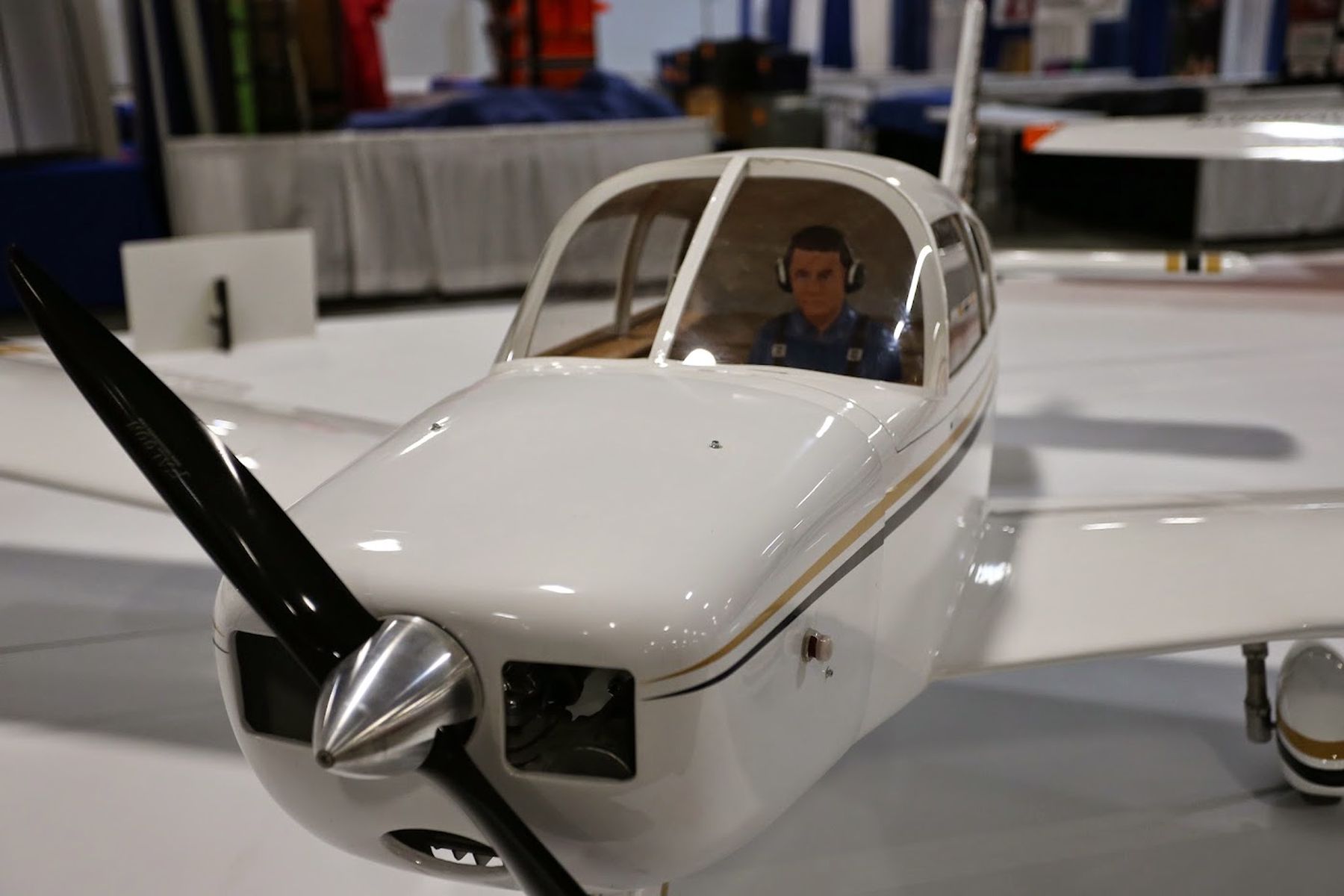
In addition to exhibits by some 150 or more manufacturers and organizations, the show was a magnet for modelers who competed for prizes in a static competition that was staggering for its size and the beauty of the models on display.
Modelers (and exhibitors) from all over the country attended the show, as it showcased all the latest in kits, engines, motors, radio systems, plans, accessories, and other hardware.
The WRAM show was normally held on the last full weekend of February each year, and open to the public Friday through Sunday. It ran from 1969, first as the Eastern States R/C Jamboree in the basement of the Westchester County Center, through its final edition in 2016 at the Meadowlands Exposition Center. Read the full story in the club history.
- First show
- 1969Eastern States R/C Jamboree, White Plains
- Final show
- 2016Meadowlands Exposition Center, Secaucus NJ
- Exhibitors
- 150+manufacturers and organizations
- Peak attendance
- 17,000over three days
Exhibitor listings
Static Competition
Overall Best in Show Prize! Best in each class prizes were awarded (first place, second, and third in class).
Junior Competition (age 16 and under): Best Junior Entry, trophies for second to sixth places, and small prizes for all other entries. (Note: Junior Class entries could be any kind of radio controlled model.)
All models must be operable and radio-controlled.
Officially Judged Categories
Designer Scale · WW1 · Post WW1 Military · Civilian · Stand off Scale · Scale Electric · Sport · Pattern-IMAC · Vintage R/C · Helicopter · Junior · R/C Car · R/C Car Large Scale · Boat Scale Military · Boat Scale Civilian · Boat Racing
The static display ran through the center of the hall in three divisions, Aircraft, Cars and Boats, with a large pond giving R/C boaters a chance to demonstrate their aquatic skills.
Swap Shop
Another big attraction of the show was the Swap Shop, to which modelers brought their spare equipment for sale. Hundreds of items changed hands each year.
Seminars and the WRAM Flyer Program
Seminars for beginners and advanced modelers were introduced at the show in 1996 and proved enormously popular. One earlier program was a free building program for boys and girls, aged 8–12, in which a rubber band-powered WRAM Flyer (the great Delta Dart design by Frank Ehling) was provided for completion by each participant. Sessions were held at 11 am and 2 pm each day.
One of the latter program’s instructors, Tony Tartaglia, offers insights after some 15 years of experience:
Kids have a sustained interest in even the simplest of planes like the WRAM Flyer. You must view this as both a building and flying project. In our experience the controlled flying competition that takes place after the building is done carries more impact than the actual building.
Anyone familiar with the little rubber band-powered plane knows its wonderful simplicity of design and construction. Little needs to be added to the list of instructions for any adult who wishes to help a child with it or to encourage other adults to get their kids involved. Before the program begins, we encourage parents or older friends to join in with the kids. Often the adult who is unfamiliar with modeling becomes hooked by this shared experience, if only to find a new door of contact with the child. Make it clear to the participants what the Flyer model can do once it is built, and that the child will see his or her completed model really fly.
Once building begins, the kids complete construction of the wing, rudder, and stabilizer. The construction simply involves gluing down the sticks right onto the plan, which then becomes the covering of the airplane. To speed up the building process in the limited time we had at the show, the components are finally assembled by an experienced project leader.
The final assembly consists of joining the motor stick to the wing and stab. We used glue guns earlier, but now use CA adhesive with an accelerant to fill in the gaps that sometimes come of youthful exuberance. When there is plenty of drying time, any white glue will do the job and a child can use it with a little help to assure that joints are properly filled.
Once the Flyer models are done, the flying phase begins. This is the most satisfying stage of the project for instructors as well as students. The competition is simple: dollar bills are hung from the ceiling roughly six to eight feet apart. Each youngster gets to fly his model, one at a time, and trims his plane with the goal of hitting the dollar or the string attached to it. Of course, they kept the prize if hit! The planes are trimmed with a small amount of clay in the nose to keep them from climbing. After each flight, the instructors discuss each plane’s performance, suggesting any improvements possible in balance or launching techniques. Each participant then gets to fly again.
The fly-off has proven to be the most eagerly awaited part of the project. This is evidence of the interest and enthusiasm kids have to see the planes perform well. Without doubt the project would not be nearly as successful without the attention given to each kid, their plane, and its flight.
After the project of building and flying the WRAM Flyer, what’s next? That depends on the age of the modeler and their contact with adults, parents, or teachers interested in model aviation. Over time, the most significant contribution to these kids’ interest in models has been the satisfaction of watching their simple planes fly. With no regard for the experience of their builders, these planes give kids a taste of the thrill of model flying.
Howard McEntee Memorial Award
This award was presented annually by the WRAMs at the show given in recognition of great contributors and innovators in the hobby of radio control. Howard McEntee was himself an early developer and experimenter who was instrumental in helping the new hobby start its development toward the amazingly reliable systems we have today. When McEntee passed away in 1972, Bob Foshay, a now-retired member of the WRAMs, encouraged the club to begin an award in McEntee’s name that would recognize others with the pioneering spirit and accomplishments exemplified by its namesake. Following are the names of the recipients since the award was established:
- 1973Maynard Hill
- 1974Ed Lorenz
- 1975Bill and Walt Good
- 1976Don Mathes and Doug Spreng
- 1977Bob Dunham
- 1978Phil Kraft
- 1979Gerry Nelson
- 1980Hal DeBolt
- 1981Paul Runge
- 1982Bob Aberle
- 1983Nick Ziroli
- 1984Carl Goldberg
- 1985Bob Novak
- 1986George Myers
- 1987Fred Marks
- 1988Don Lowe
- 1989Bill Hershberger
- 1990John Worth
- 1991George Steiner
- 1992Bill Winter
- 1993Cliff Weirick
- 1994Don Brown
- 1995Art Schroeder
- 1996Bill Northrop
- 1996Bob Foshay (special club award to founder)
- 1997Jack R. Albrecht
- 1998Carl Schwab
- 1999Leon Shulman
- 2000Norm Rosenstock
- 2001Abbott Lahti
- 2002Hazel Sigafoose
- 2003Dave Brown
- 2004Pete Reed
- 2005Tom Hunt
- 2006Stuart "Stu" Richmond
- 2007Dave Platt
- 2008Henry Haffke
- 2009Keith Shaw
- 2010Frank Tiano
- 2011Joe Beshar
- 2012no award
- 2013Roy Vaillancourt
- 2014Dave Johnson
- 2015Wendell Hostetler
Show videos


